
How Does Solar Energy Actually Work? (And Where Do Electricians Fit In?)
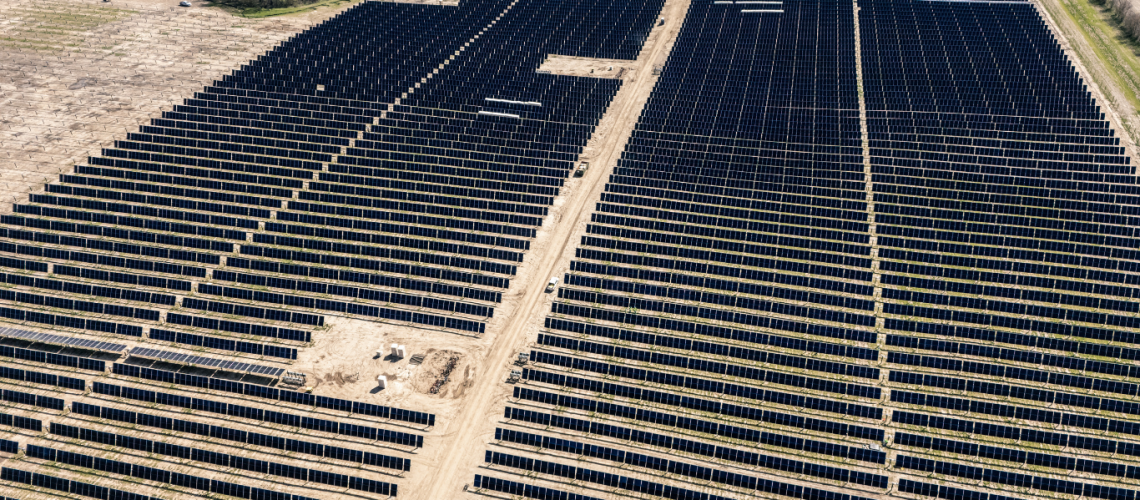
When people think about solar energy, they usually picture rows of solar panels soaking up the sun.
But the panels are only part of the story.
Turning sunlight into electricity — and safely delivering that electricity to homes, businesses, and the power grid—takes an entire electrical system working together.
Here’s a simple look at how it all works.
Step 1: Solar Panels Capture Sunlight
Solar panels are made up of small devices called photovoltaic (PV) cells.
When sunlight hits these cells, they create electricity by getting tiny particles called electrons moving.
Think of it like sunlight flipping the “on” switch.
At this point, the panels have generated electricity—but it isn’t ready to power your lights, appliances, or equipment just yet.
Step 2: The Electricity Needs to Be Converted
The electricity that comes directly from solar panels is called direct current (DC) electricity.
Most homes, businesses, and the electrical grid use a different type called alternating current (AC) electricity.
An easy way to think about it is this:
- DC electricity travels in one direction, like water flowing through a straight pipe.
- AC electricity constantly changes direction, making it much more efficient for delivering power over long distances and running the equipment we use every day.
Because they use different types of electricity, the power from solar panels has to be converted before anyone can use it.
Step 3: The Inverter Does the Heavy Lifting
This is where the inverter comes in.
The inverter converts DC electricity from the solar panels into AC electricity that can power buildings or be sent to the utility grid.
Modern inverters do much more than just convert electricity. They also help monitor the system, improve energy production, communicate with utility companies, and protect the electrical system if something isn’t working correctly.
Without an inverter, solar panels couldn’t provide usable electricity.
Step 4: The Electricity Travels Through an Entire Electrical System
This is the part most people never see.
Once electricity leaves the inverter, it still has to travel safely to where it’s needed.
That requires a network of electrical equipment working together, including:
- Underground conduit that protects electrical cables
- Power cables that carry electricity across the site
- Transformers that adjust voltage levels
- Switchgear that safely controls electrical power
- Utility connections that tie the solar facility into the electrical grid
Think of the solar panels as the engine that creates the power, while the electrical infrastructure is the highway that safely delivers it.
Without both pieces working together, the electricity never reaches homes, businesses, or the grid.
Where Westphal Comes In
At Westphal & Company, we help build the electrical infrastructure that makes solar energy possible.
Our teams install the underground conduit, medium-voltage cable systems, transformers, utility connections, and other critical electrical components that allow renewable energy facilities to operate safely and reliably.
On large-scale projects, we also install systems that track weather conditions and the movement of the sun. These systems allow solar panels to adjust throughout the day, maximizing energy production.
Our commitment doesn’t end when installation is complete. Every phase of the project is tested and documented to ensure quality and long-term performance. On utility-scale projects, electrical circuits are tested, with results carefully recorded. On community solar projects, our teams measure and document torque settings for pile caps, racking, and solar modules to verify every mechanical connection meets specifications.
Westphal also provides ongoing Operations & Maintenance (O&M) services for a large portfolio of solar facilities. Our dedicated team of electricians focuses exclusively on maintaining systems, performing repairs, troubleshooting issues, and monitoring performance to help keep renewable energy assets operating safely and efficiently.
Every installation requires careful planning, precise construction, rigorous quality control, and experienced electricians who understand how complex electrical systems work together.
The Bottom Line
Solar energy is actually a simple process:
- The sun shines on solar panels.
- The panels create DC electricity.
- An inverter converts that electricity into AC power.
- Electrical infrastructure safely delivers the electricity to the grid, so homes and businesses can use it.
Solar panels may generate the electricity, but they’re only one piece of the puzzle.
Behind every successful solar project is a team of electrical professionals building the systems that safely move that power from the panels to the people who depend on it.
That’s the work Westphal & Company is proud to do every day.